
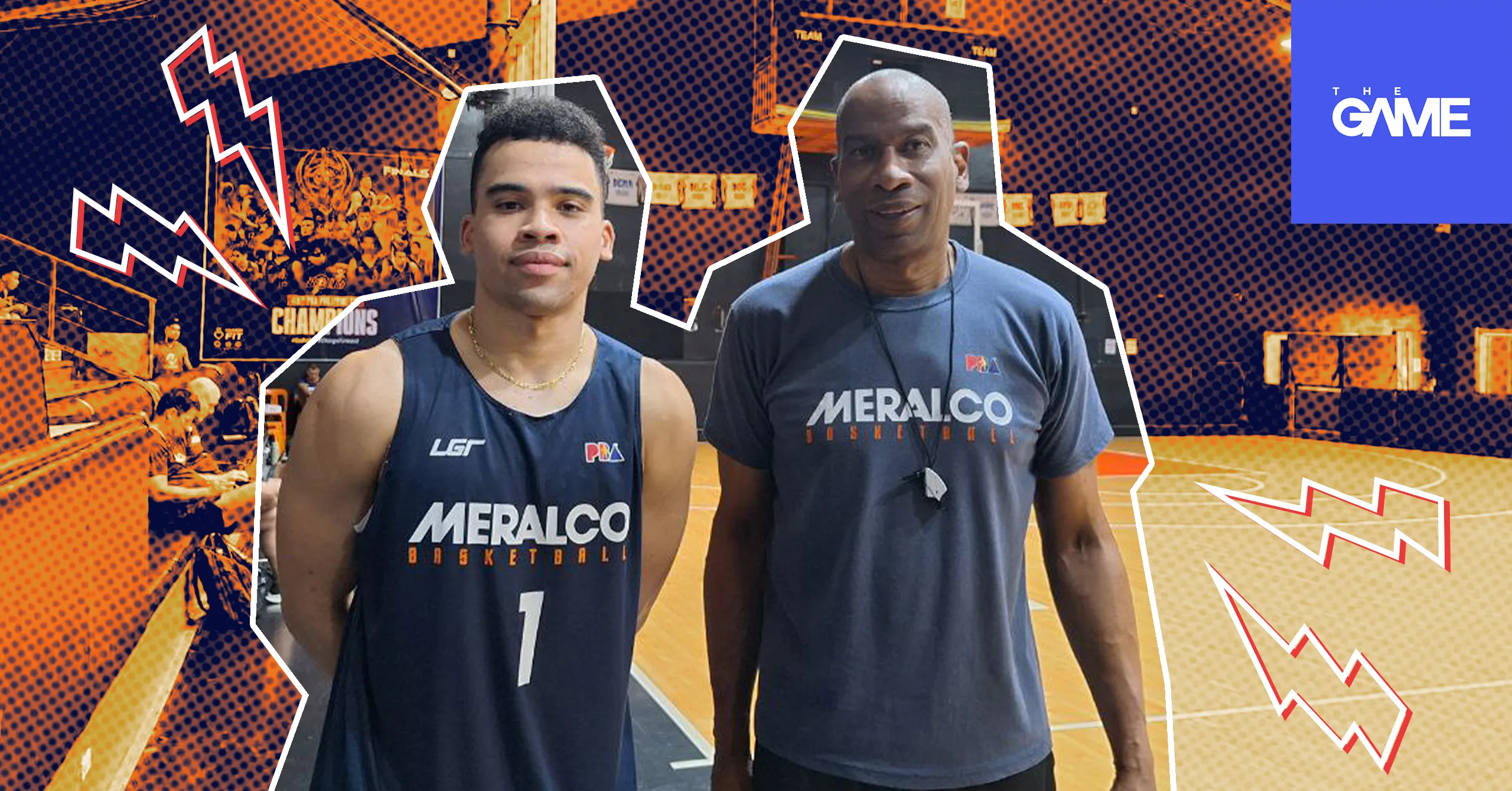
PBA legend Norman Black has had to fulfill multiple roles with son Aaron as he strives to balance being both a coach and a father in the demanding world of professional basketball.
Aaron Black remembers when he first began to realize that his dad was a famous person.
“Very early on, I think,” Aaron told The GAME. “He used to take me to camps as early as maybe five, six years old. I think it was Selecta and even a camp in the village as well.
“I’d see people take pictures with him. So from a really young age, I knew he had accomplished a lot. I didn’t know exactly what it was, I guess, as a young kid. But I knew of it.”
At six-foot-five, Norman Black would undoubtedly stand out in public, even more so in a basketball camp because, after all, he is a very famous basketball personality and has been ever since he arrived here in 1981.
As he grew older, Aaron gradually understood why strangers would always walk up to his father to greet him like he was their long-lost uncle. Inevitably, the son showed interest in the father’s occupation. It couldn’t be helped.
“I fell in love with basketball in their (his parents’) room. They bought a Little Tikes court for me. And I just fell in love with the game there.
“From there, just like I said, he started bringing me to camps. And I could see how much I loved the game. So, yeah, he had a very big, big effect on me. Never forced me into it. But at the same time, I guess that energy just rubbed off on me.”
Norman confirms that he never set out to turn his son into a basketball player.
“Well, I never had any expectations,” the eleven-time PBA champion coach tells The GAME. “I wanted him to enjoy basketball. He enjoyed playing the game. I never had to force him or ask him to go play. He did it on his own. He was up at the basketball court almost every day playing with the other kids.
“So he took a liking for the game right from the start. It wasn’t that I pushed him, or my wife pushed him, or the family pushed him. It’s just something that he enjoyed doing.”
And once Norman saw how serious Aaron was about the sport, he gave him not just fatherly advice, but advice that came from a player who became the first recipient of the PBA’s “Mr. 100%” award because of his work ethic.
“(I told him) he’s going to have to work at it because it’s difficult. It’s not that easy to become a basketball player, particularly a high school or college, or pro basketball player. So he would have to put the work in, and whatever he put in would be what he would get out of it.”
As it turned out, Aaron was a chip off the old block.
“That’s the one thing about Aaron,” Norman says. “There’s never been a problem with his work habits. He’s always been there, working hard every day. In a lot of ways, I think he has overachieved a lot in his career, and that’s mainly because of his work habits.”
That work ethic led to a high school career with the Ateneo Blue Eaglets, a slot on the Gilas under-18 team, and two championships with the Blue Eagles in the UAAP seniors division.
Aaron then decided to skip his final playing year in college and proceeded to tear it up in the MPBL and PBA D-League, where he routinely put up triple-doubles.
All this was in preparation for his next move, which was to join his dad in the PBA.
On the same team now
Coaching your own son is a rarity in the Philippine Basketball Association, maybe because it’s such a difficult proposition. Prior to the Blacks, there have been only two other father-son/coach-player pairs – Robert Sr. and Robert Jr. (Dodot) Jaworski with Ginebra San Miguel and Ato and Marc Agustin with Petron Blaze.
In both instances, the results were, to put it charitably, not optimal at all. Dodot played 101 games for his dad and averaged a little over two points per game, although they did win a championship together in 1997. Marc fared even worse, lasting just 21 games and averaging less than two points a game.
The bottom line is, it’s always risky in any sport to coach your own son. There will always be questions, snide remarks, and whispers behind your back about nepotism and partiality, especially if the son doesn’t match the father’s success.
Norman Black was aware of all of this when, as the head coach of the Meralco Bolts, he selected Aaron Black with the 18th overall pick in the 2019 PBA draft.
“Well, when I drafted Aaron, obviously, I raised a lot of eyebrows,” he said. “Because it’s very similar to what happened with the Jaworskis. People don’t seem to like it when you work with your son or you work with a relative.
“But I just thought that he had the talent to be able to play in the PBA. I thought he could help the team. That was the reason why we drafted him.
“I heard the talk. I heard what people were saying. But this is the way I always looked at it. I looked at it this way because I’m a former player. Whatever you do on the basketball court, that’s you. That’s your talent. That’s your ability. That’s your accomplishment. That’s your production.
“So if Aaron goes out there and produces and does well on the basketball court, then that’s him. Nobody can take that away from him. I’ve never scored a point for him. I’ve never grabbed the rebound for him. It’s been only him. So you kind of put those naysayers aside and you just tell him, hey, just go out and work for everything that you want.”
Aaron did prove his dad right and the skeptics wrong. In his rookie season, which was essentially limited to a single bubble tournament in Pampanga, he was named Outstanding Rookie (the traditional Rookie of the Year award was shelved) while helping the Bolts reach the semifinals. In 2022-23, he averaged a career-high 14.6 points per game, a number only true basketball talents can reach in the PBA.
If anything, being the son of Norman Black made Aaron work even harder.
“Of course, people are going to say things, especially coming into the league, playing for him at the start, which actually really pushed me,” he said. “It pushed me to work even harder than I was working. Not just to prove myself that I can make it in the league, but prove other people wrong as well, or whatever they’re thinking.”
For Norman, it’s important that they both block out the noise and go about their respective jobs. After all, people will always talk.
“As far as what other people would think, I don’t have any control over that. I’m my own individual person. I have my own career. Now it’s up to Aaron to have his own career. And as long as he’s doing something that he loves, I support him 100%.”
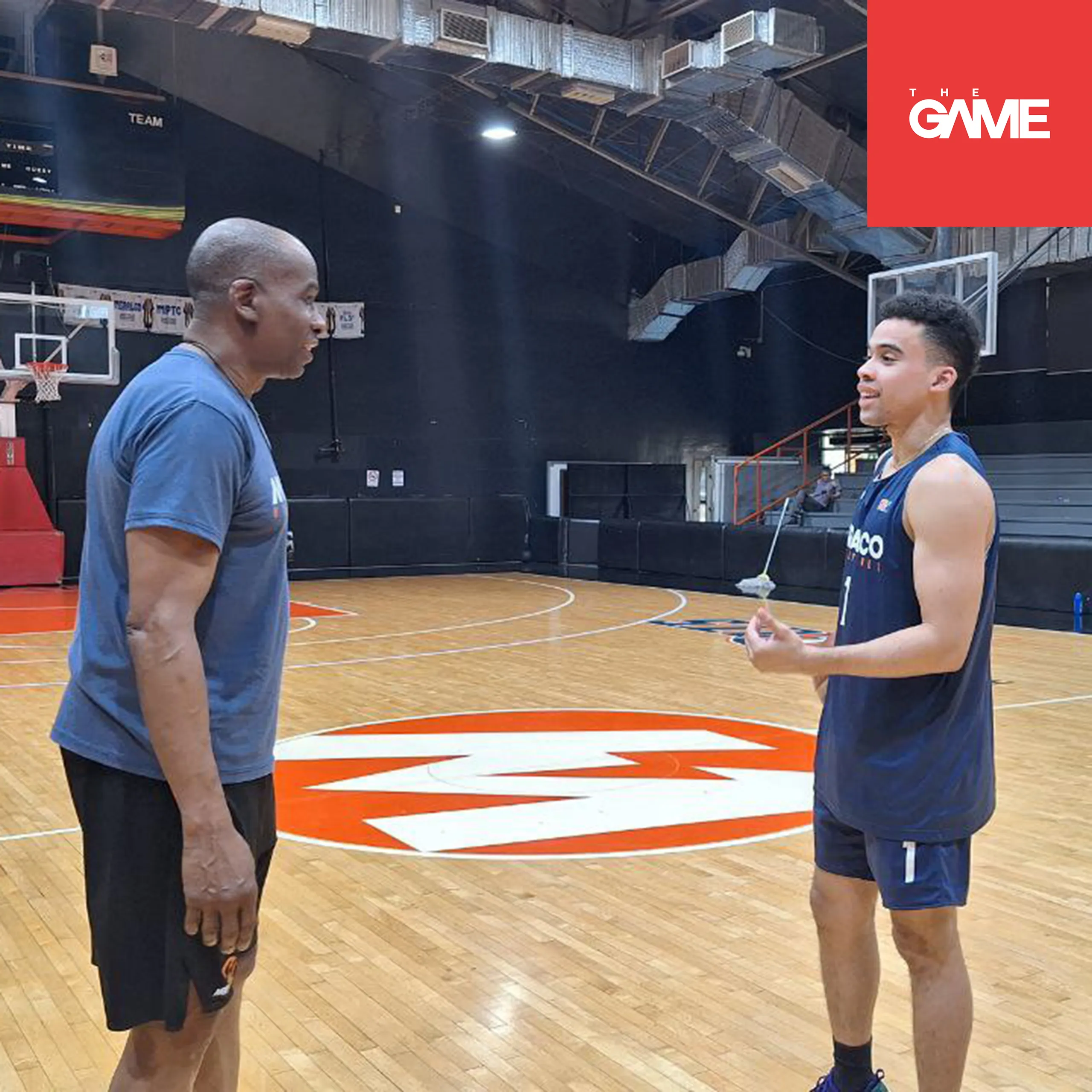
Separating coach from father
When a coach berates a player or they get into an argument, both can simply head home, cool it off, and see each other the following day like nothing happened. This dynamic, for obvious reasons, can’t be played out when your coach is also your father.
For Aaron and Norman Black, working with each other while living under the same roof was not without its challenges.
“I think in a lot of ways, I’m much harder on Aaron than I am the other players because, remember, he goes home with me,” Norman says. “So I get to talk to him the whole day. I get to tell him all the things that I think he can improve on.
“It’s probably different from what I would do with other players because I don’t see them for 24 hours a day. People don’t realize it. Probably his teammates don’t even realize it, but I coach him a lot more than I coach the other guys, that’s for sure because I’m with him the entire day.”
Aaron admits there was an adjustment period at first.
“Early on, there were some adjustments that had to be made because he’d never coached me. I’d never played for him, really. But outside of that, after a while, we got used to it.
“Of course, at the start, we had our misunderstandings and things like that. But we got used to it after a while. I think it was also just, at the same time, me trying to make a name for myself and prove myself and him making sure that I know what I’m getting into in the PBA.
“Especially before games, I like to be kind of on my own, just like thinking about things and even meditating to a certain extent. So there was a time where we stopped going to the games together because we would go to the games together at the start. Well, we started in the bubble, and then we stopped going to the games together.
“Now we do again. So there’s just little transitions where you try to adjust to each other, basically, because we were both new to it. It wasn’t just me, it was him also.”
Initially, there were times Norman couldn’t help himself and would continue coaching Aaron even when they were at home.
“I have a tendency of coaching a lot, even when we’re not at the gym, particularly since I’m with him almost the entire day, every day. It’s easy for me to walk into his room and say, ‘Hey, Aaron, I need you to do this or I want you to do that or this is what we’re trying to do.’ Most players don’t have to deal with that because once I leave them in practice, they don’t see me until the next day.
“So I had to make some adjustments, too, that I kind of toned it down a little bit and limited the coaching at home. I wouldn’t say I backed off because up to now I don’t think he would say I backed off, but I just know when to talk and I know when to be quiet.”
The very public nature of their profession adds another layer of scrutiny when compared to other father-son work relationships.
“When you work for your father in business, it’s pretty much within that business and it’s pretty quiet and things don’t really get out as far as news is concerned or what’s happening with that relationship,” Norman says. “It’s different when it’s in basketball because I’m the coach, he’s the player. There’s interaction throughout the entire 48 minutes that the game is being played, so everybody’s sitting there observing, making their own opinions about what’s going on.
“They’ll maybe say something about how much playing time he’s getting or how many shots he’s getting up or et cetera, et cetera. So, because we’re exposed to the public, obviously our relationship is a little bit different than say a regular father and son in business would be.”
Reaching the pinnacle
The highlight of the father-son work relationship was the PBA championship that Norman and Aaron shared when the Bolts won the Philippine Cup title last year. Although Norman had already been reassigned as a consultant and Aaron had missed the finals with an injury, their moment of triumph was still sweet.
“It was special to me because this is my 11th year with Meralco, and that was the ninth year, and we had not won a championship with me as head coach,” Norman says. “And even though I was a consultant for the team, I was so happy to see them win because I know all of the support that the Meralco management gave to the team.
“And one of my most disappointing parts of my career will probably be the fact that I wasn’t able to win a championship for them as a coach. But at the same time, being part of the team was certainly satisfying. I was happy for everybody because finally everybody was happy that we had finally won.”
“Yeah, it was great,” Aaron says. “I mean, it was great. I was actually on the sidelines. I sat out, I think, the last 10 games of that conference because of my injury. But it was great seeing all of us succeed. Finally, I also watched all those Meralco years growing up. So seeing that we finally won a championship and we were on the team was great.”
The two, of course, both yearn for another championship together. Until then, Norman Black will continue his dual role as father and coach, and Aaron will continue to chart his own path as he navigates the tricky road straddling his father’s enormous shadow and his own legacy as a pro player.
“People are always going to have opinions,” Aaron says. “You can’t stop them from having opinions. You can only do the right thing. You can only do your best on the court.”
“I have to be quite honest with you, it’s been fun coaching Aaron,” Norman says. “I mean, no negativity, it’s all been all positive as far as I’m concerned. As a former basketball player, it’s very easy for me to shut out what other people say because in the end, I don’t think they have any say on what’s going to happen anyway in my life.
“And even when it comes to my relationship with him, I feel the same way about that. You can say whatever you want to say, but it’s really what’s going to happen between the two of us. I’m just hoping that he can have a good, long, solid career in the PBA, and he can stay healthy.
“And I’m not so much worried about what other people may think about the fact that I’m coaching my son, or I coached my son, or I drafted my son, or whatever that may be. Not a lot of kids get to work with their fathers, especially with something that I love to do, which is basketball.”
Images from Sid Ventura.